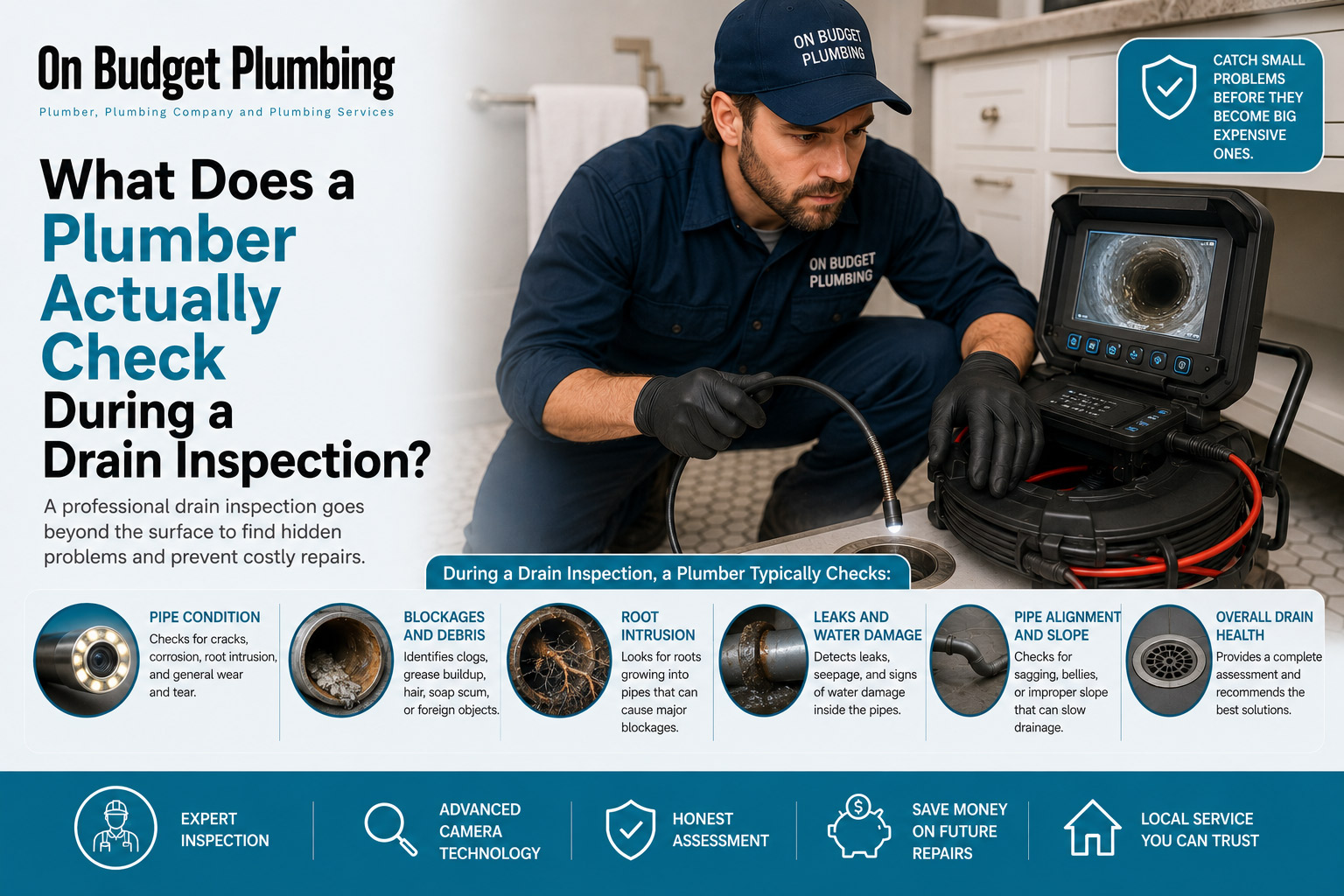
What Does a Plumber Actually Check During a Drain Inspection?
Most homeowners have heard the term drain inspection, but few have a clear picture of what it actually involves. The phrase tends to conjure an image of someone running water and watching it drain — which is not what a professional drain inspection looks like at all. A real inspection goes considerably deeper than what is visible from the surface, and understanding what a plumber is actually evaluating helps you interpret results, ask better questions, and make more informed decisions about what your system needs.
Step 1: The Visual and Flow Assessment
Every inspection starts at the fixtures themselves before any equipment is deployed. A plumber walks through the home systematically, checking each drain-connected fixture to build a picture of how the system is performing as a whole. During this phase, the following are assessed:
Drain flow rate at each fixture — Whether water clears immediately, slowly, or sluggishly tells a story about where resistance exists in the line.
Gurgling or bubbling sounds — Air displacement through connected fixtures indicates partial blockage or venting issues in the drain line.
Odors at fixture openings — Persistent sewer gas odors suggest either a dry trap, a cracked drain component, or activity in the line that is producing gas.
Visible corrosion or staining at drain openings — Surface rust, green oxidation, or mineral deposits around drains can indicate what is happening inside the pipe wall.
Fixture trap condition — The P-trap under sinks and behind toilets retains water to block sewer gas. A trap that empties quickly or holds debris is flagged for further evaluation.
Step 2: The Camera Inspection
When a drain issue exists or an inspection requires verification of pipe condition, a camera is deployed. This is the step that turns a surface observation into a definitive diagnosis. A flexible, waterproof camera is inserted into the line through a cleanout access point, and the technician guides it through the drain system while viewing live footage on a monitor. Here is what the camera actually reveals during an inspection in an Edmonton, Alberta home:
Scale and buildup — Mineral deposits and grease accumulation narrow the internal pipe diameter. The camera shows the degree of buildup and where it is concentrated.
Root intrusion — Tree and shrub roots enter drain lines through cracked joints or deteriorated connections. The camera shows root masses ranging from fine filaments to dense obstructions.
Pipe deformation — Soil movement, particularly from Edmonton, Alberta's freeze-thaw cycles, can cause pipe bellies (sagging sections where waste pools), cracks, or collapse.
Joint separations — Older clay or cast iron lines are particularly prone to joint shifts over time. The camera identifies gaps where groundwater can enter and waste can escape.
Blockage location and composition — The camera confirms exactly where a blockage sits and what it appears to be made of, which determines whether auger clearing, hydro jetting, or repair is the right response.
Step 3: Evaluating the Venting System
Drain systems require air to function. Every drain line is connected to a venting system that allows air to enter the pipe as water flows, preventing siphoning and maintaining consistent flow. Problems with drain venting are frequently misdiagnosed because the symptoms — slow drains, gurgling, odors — overlap with blockage symptoms. A thorough inspection includes checking whether venting is intact, whether vent pipes are clear of debris or ice (a concern in Edmonton, Alberta during winter months), and whether venting changes made during renovation have left any part of the system improperly vented. Improper venting can cause recurring drain performance issues that no amount of drain cleaning will fix.
Step 4: Checking the Main Sewer Line and Cleanout Access
The main sewer line carries all waste from the home to the municipal connection. It is the most consequential part of the drain system and the one most affected by Edmonton, Alberta's soil conditions. During an inspection, the main line is evaluated for flow consistency, signs of partial blockage, evidence of root activity, and the condition of the cleanout access fitting. A cleanout that is buried, sealed, or missing makes future service harder and more expensive. If the camera reveals concerns in the main line, the plumber will identify whether clearing, spot repair, or full line replacement is the appropriate next step.
Frequently Asked Questions
How long does a professional drain inspection take?
A visual assessment of all fixtures typically takes 30 to 45 minutes. A full camera inspection of the drain lines adds another 30 to 60 minutes depending on line length, access difficulty, and what the camera encounters. Budget for two to two and a half hours for a comprehensive inspection of a standard home.
Do I need a drain inspection if I have not had any problems?
Preventive inspections are valuable, particularly for homes over 20 years old, homes with mature trees on the property, or homes that have never had a professional assessment. Many significant drain issues develop silently and are found incidentally during an inspection, long before a backup or failure occurs.
Will the camera inspection damage my pipes?
No. Drain cameras are designed to navigate pipe bends and diameter changes without damaging the pipe interior. The camera is passive — it observes only. If a pipe is already severely damaged or cracked, the inspection reveals that — it does not cause it.
Can I get a copy of the camera footage after an inspection?
Many plumbers can provide a recording of the camera inspection on request. This is worth asking for, as it gives you a documented baseline of your drain system's condition that is useful for future comparisons or insurance documentation.
What is hydro jetting and when is it recommended after an inspection?
Hydro jetting uses high-pressure water to clean the interior walls of a drain line rather than just clearing a blockage. It is typically recommended when a camera inspection reveals significant scale buildup, grease accumulation, or fine root growth. It is more thorough than auger clearing and leaves the pipe interior significantly cleaner.
Conclusion
A drain inspection is not a formality — it is a structured diagnostic process that moves from surface observation to documented pipe condition. When done properly, it tells you exactly what is happening inside your drain system and what needs to happen next. On Budget Plumbing conducts thorough drain inspections throughout Edmonton, Alberta, using camera technology that takes the guesswork out of drain assessment. If you have been putting off an inspection or want to understand the condition of your system before problems develop, reach out to schedule an appointment.
