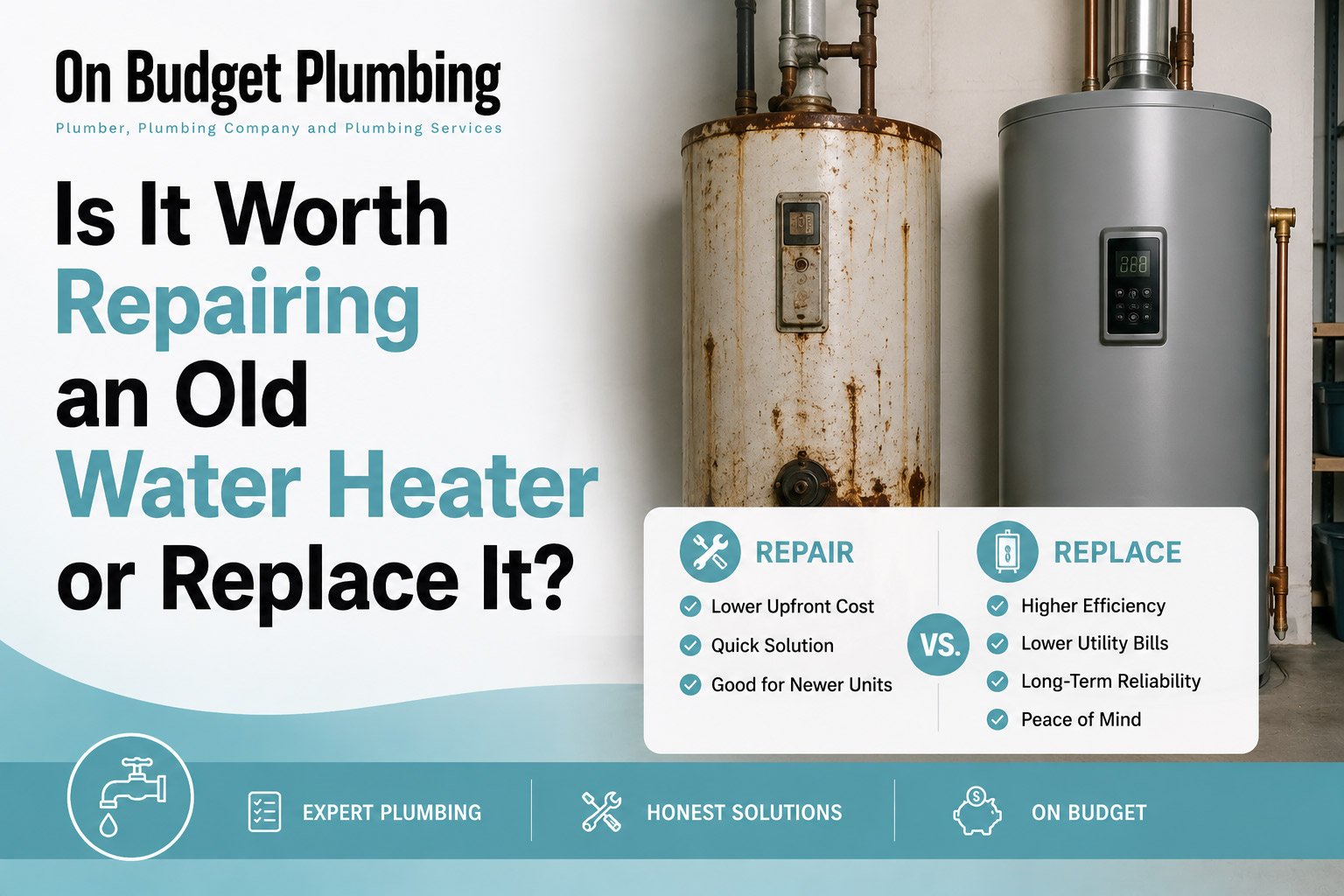
Is It Worth Repairing an Old Water Heater or Replace It?
When a water heater starts causing problems, the first question most homeowners ask is whether to fix what they have or invest in something new. It is rarely a simple answer, and the right choice depends on how old the unit is, what has gone wrong, how often it has needed attention, and what a replacement would actually cost compared to continued repairs. Making the wrong call in either direction is expensive — either paying for a repair that buys only a few more months, or replacing a unit that still had years of reliable service left.
Understanding the Typical Lifespan of a Water Heater
Before evaluating any specific repair, it helps to know where the unit stands in its expected service life. Most water heaters have predictable lifespans based on type and quality of maintenance.
Conventional tank water heaters (gas or electric): 8 to 12 years with regular maintenance
Tankless water heaters: 15 to 20 years with proper servicing
Heat pump water heaters: 10 to 15 years
High-efficiency gas units: closer to 12 to 15 years with annual maintenance
A unit that is within its expected range and has been maintained well is a reasonable candidate for repair. One that is past its expected lifespan is almost always better replaced — not because a repair would not work, but because additional failures are statistically likely in the near term.
The Repair vs. Replace Decision: A Comparison
The following table compares key scenarios to help guide the decision. Use this as a starting point for the conversation with your plumber rather than an absolute rulebook.
What Repairs Are Actually Worth Doing in Edmonton, Alberta
Some water heater repairs are straightforward, cost-effective, and extend the unit's life meaningfully. Others are stopgap measures that delay an inevitable replacement. For homeowners in Edmonton, Alberta, the local climate adds an extra consideration — a unit that fails in January creates an urgent situation where waiting for parts or scheduling is not an option. Knowing which repairs buy real time versus which ones just delay the call helps with planning.
Repairs that are generally worth doing on units under 10 years old include replacing a failed heating element, swapping a faulty thermostat, replacing a pressure relief valve, fixing a broken dip tube, and addressing minor connection leaks. These are inexpensive parts with straightforward labour and can restore a unit to full function if the tank itself is sound.
Repairs that are rarely worth doing regardless of age include addressing active rust or corrosion on the tank body, patching an internal tank liner, or replacing a unit that has already required two or more service calls within a 12-month period.
The True Cost Comparison Over Time
When evaluating repair versus replacement, the correct comparison is not the immediate cost of a repair versus the full cost of a new unit. It is the total projected cost over the next five years. A repair that costs 300 dollars on a unit that will likely need another repair in eight months — and replacement in two years regardless — may cost more in the long run than a replacement that starts a new 10-to-12-year service window. A licensed plumber can give you a realistic assessment of where your unit stands and what its likely trajectory is, which is information that should factor into any financial comparison.
Frequently Asked Questions
Does the brand of water heater affect how long I should try to repair it?
Brand quality matters at the time of purchase more than during repair decisions. What matters more is maintenance history, water quality, and the specific failure type. A well-maintained mid-grade unit often outlasts a premium unit that never had its anode rod checked.
What is an anode rod and why does it matter for the repair decision?
An anode rod is a sacrificial metal rod inside the tank that prevents corrosion by attracting minerals and oxidizing instead of the tank walls. When it is fully depleted, the tank itself begins to corrode. If a technician finds a depleted anode rod during service, it indicates the tank has been unprotected for a period of time — which changes the repair calculus significantly.
Are tankless water heaters significantly more expensive to install than tank units?
The upfront installation cost is higher, often by a meaningful amount, particularly if gas line upgrades or new venting is required. However, energy savings over a 15 to 20 year lifespan frequently offset that difference. The decision comes down to how long you plan to stay in the home and whether your current infrastructure supports a tankless upgrade.
What rebates or incentives are available for replacing a water heater in Alberta?
Energy efficiency rebate programs change periodically, and Alberta has had various programs through utilities and the provincial government. Your plumber or local utility provider can advise on current incentive availability, which can sometimes make a high-efficiency replacement more financially attractive.
How do I know if my water heater has sediment damage that affects the repair decision?
A popping, rumbling, or crackling sound from the tank when it is heating is a strong indicator of significant sediment accumulation. A technician can flush the tank and inspect the condition of the components to determine whether the buildup has caused damage that makes repair less worthwhile.
Conclusion
The repair versus replace decision is rarely obvious from the outside, and getting it wrong in either direction costs money. On Budget Plumbing helps Edmonton, Alberta homeowners make that call with accurate information — not with a push toward one outcome over another. If your water heater has been giving you trouble, reach out for an honest assessment of what it would take to fix it, what a replacement would involve, and which choice actually makes sense for your situation.
