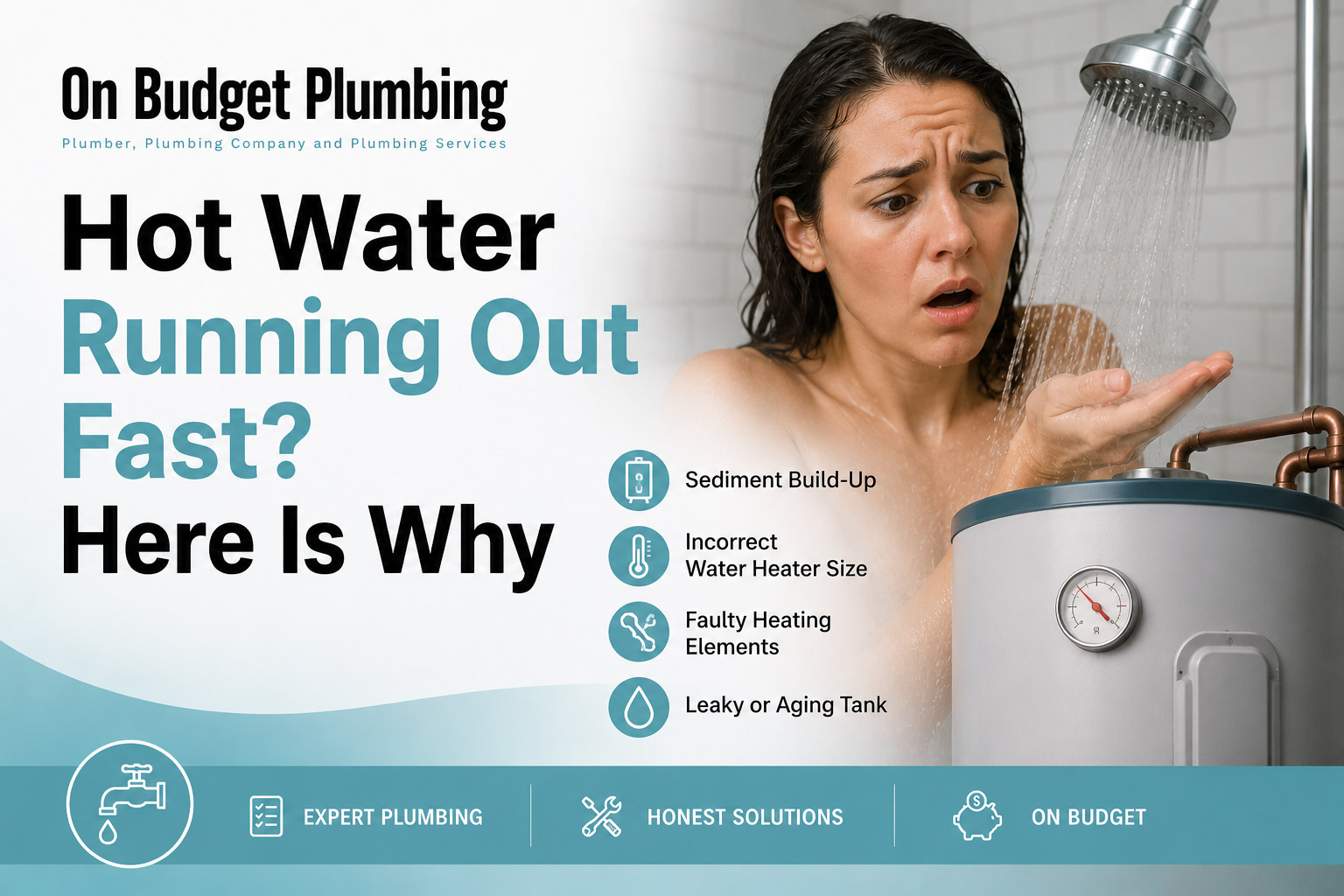
Hot Water Running Out Fast? Here Is Why
Running out of hot water mid-shower is one of those problems that feels minor until it is happening every single day. For many households in Edmonton, Alberta, it starts gradually — the shower that used to last 15 minutes now runs cold at 8. Then it gets worse. Before long, someone is timing their morning routine around the hot water tank. The frustrating part is that this problem almost always has a specific, fixable cause. The harder part is knowing which one.
The Heating System Is the First Place to Look
Most homes in Edmonton, Alberta rely on a traditional storage tank water heater. Inside that tank, one or two heating elements (electric) or a gas burner are responsible for bringing water up to temperature and keeping it there. When hot water runs out faster than it should, the heating system is usually involved in one of these ways:
Failing heating element — In electric water heaters, one element typically handles recovery while the other maintains temperature. When the lower element fails, the tank only heats the top portion of the water, dramatically reducing usable capacity.
Thermostat set too low — Factory thermostat settings are sometimes conservative. A setting below 49°C (120°F) may not adequately maintain temperature in a cold basement or utility room during winter.
Sediment buildup — Hard water minerals settle at the bottom of the tank over time, forming an insulating layer over the burner or element. The heater works harder, recovers more slowly, and delivers less usable hot water.
Dip tube failure — The dip tube channels cold incoming water to the bottom of the tank so it gets heated before rising to the top. A cracked or broken dip tube lets cold water mix directly with the hot water at the top, cooling the output prematurely.
When the Problem Is Tank Size, Not the Tank Itself
Sometimes the water heater is functioning perfectly — the household has simply outgrown it. Tank size requirements change when families grow, schedules shift, or appliances are added. These are the situations that point to capacity rather than mechanical failure:
A new family member has moved in and peak demand has increased without a corresponding increase in tank size.
A new high-flow showerhead, soaker tub, or jetted bath has been installed without accounting for its demand.
Multiple hot water draws are happening simultaneously — dishwasher running while someone showers, for instance.
The original tank was undersized when installed and worked marginally well when usage was lighter.
The general rule for tank sizing is 75 to 80 litres per person in the household, though high-demand appliances and usage habits can push that number higher.
How Sediment Buildup Quietly Destroys Performance in Edmonton, Alberta
Water quality in Edmonton, Alberta contains enough dissolved minerals that sediment accumulation is a genuine and common concern. Inside a tank that has never been flushed, the buildup layer can reach several centimetres — thick enough to create a significant barrier between the burner and the water. This forces the heater to run longer cycles to achieve the same output temperature, stresses the tank components, and substantially shortens the overall lifespan of the unit. Annual flushing removes this sediment and restores recovery efficiency. It is one of the simplest and most effective forms of water heater maintenance available.
The Recovery Rate Factor
Recovery rate refers to how quickly a water heater can reheat a full tank after it has been depleted. A standard 190-litre gas tank typically recovers in about an hour. An electric tank of the same size may take two hours or more. If your household demands hot water in overlapping intervals — morning showers, laundry, and dishes all within a two-hour window — even a properly functioning tank may not keep up. Understanding recovery rate helps clarify whether the problem is mechanical or simply a mismatch between tank capability and household demand. A plumber can assess your specific usage pattern and recommend the right solution, whether that is a larger tank, a second unit, or a switch to a tankless system.
Frequently Asked Questions
Can a water heater be too old to recover efficiently even without obvious failure?
Yes. Most tank water heaters have a service life of 8 to 12 years. As units age, components wear, sediment accumulates, and thermal efficiency declines. An older unit may not fail outright but will deliver noticeably less hot water than it did when new.
Does the location of the water heater affect how much hot water reaches the tap?
It can. Long pipe runs from the heater to fixtures mean more water must travel farther before it arrives hot. This is not a cause of running out of hot water faster, but it does mean cold water sits in those pipes and must be flushed out each time — which can feel like the hot water is slow to arrive or inconsistent.
Is it worth repairing an element in an older water heater or should I replace the unit?
If the tank itself is in good condition and fewer than 10 years old, replacing a failed element is generally worthwhile. If the tank is approaching or past its expected lifespan, investing in a repair only to face another failure within a year or two is rarely cost-effective.
Can cold weather cause a water heater to underperform?
Yes, especially in unheated spaces like garages or utility rooms. When the ambient temperature drops significantly, the heater works harder to maintain tank temperature, which can affect recovery times and reduce efficiency. Insulating the tank and the first metre of pipe can help.
What is a tankless water heater and would it solve my problem?
A tankless heater heats water on demand rather than storing it. It eliminates the recovery wait entirely and can deliver a continuous supply of hot water. The trade-off is a higher upfront cost and the need to ensure your gas or electrical supply can handle the demand. It is worth discussing with a licensed plumber before deciding.
Conclusion
Running out of hot water faster than you used to is a signal — either something inside the tank has failed, the tank has been overwhelmed by demand, or sediment has compromised its performance. None of these situations resolve on their own. On Budget Plumbing works with homeowners across Edmonton, Alberta to diagnose water heater issues accurately, recommend the right fix, and get hot water restored without unnecessary replacements. Reach out any time for an honest assessment of what is actually happening with your system.
